Selling your home privately? Here’s what your solicitor does once you agree a price
You’ve found a buyer, agreed a price and accepted their offer. So who takes it from there?
If you’re selling your home privately in England, you can go straight to a solicitor or licensed conveyancer once you’ve agreed a price. You can complete the sale without hiring an estate agent. Your conveyancer handles the legal work on your behalf, from preparing the contract to receiving the sale money on completion day (https://www.gov.uk/selling-a-home/offers-negotiations?utm_source=chatgpt.com), gov\.uk)
What do you need to do first?
Confirm the agreed price in writing and say that it’s subject to contract. Before taking your home off the market, you can ask the buyer for a few things to see whether they’re ready to go ahead.
- Proof of identity. You can ask for photo ID, such as a passport or driving licence. The buyer can share it securely with their own solicitor, who will carry out the formal identity checks. gov.uk)
- Proof of funds.** Ask how they plan to pay. A cash buyer can provide evidence they have the money available. If they’re buying with a mortgage, you can ask for a mortgage agreement in principle and evidence of their deposit. An agreement in principle is an indication of what they may be able to borrow. If they need to sell another property first, ask how far along that sale is. Ask your solicitor how any sensitive documents should be shared securely.gov\.uk, gov\.uk)
- **Ask them to contact and formally instruct their solicitor or conveyancer. Ask for the firm’s name and contact details so your solicitor can get in touch and confirm they’ve been appointed. Instructing a solicitor is a practical sign that the buyer is taking steps to move forward. The sale becomes legally binding when contracts are exchanged. ([gov\.uk](https://www.gov.uk/government/publications/how-to-sell-a-home/how-to-sell-a-home?utm_source=chatgpt.com.
Once you have the buyer’s solicitor details, pass them and the agreed price to your own solicitor so the two firms can get the legal work underway.
What does your solicitor or conveyancer do?
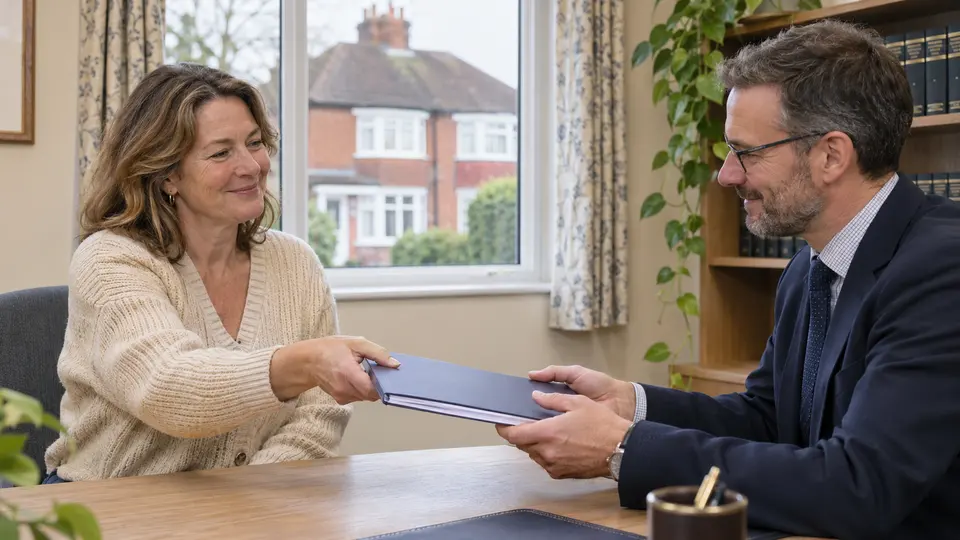
Your conveyancer prepares the draft contract and sends it to the buyer’s conveyancer, along with the relevant property documents. The buyer’s conveyancer carries out searches and checks the legal title. If they raise questions, your conveyancer deals with them and asks you for any information they need.[gov\.uk](https: www.gov.uk/selling-a-home/offers-negotiations?utm_source=chatgpt.com), [gov.uk](https://www.gov.uk/selling-a-home/transferring-ownership-conveyancing?utm_source=chatgpt.com
You’ll usually fill in forms about the property and what you’re leaving behind, such as carpets, curtains or appliances. You’ll also provide any relevant paperwork, sign documents when asked and arrange access if the buyer books a survey. Your conveyancer will tell you what they need from you as the sale progresses. gov\.uk)
When is the sale official?
Exchange of contracts is when the agreement becomes legally binding\. You and the buyer agree the completion date by the time you exchange. (gov.uk, gov.uk)
Completion** is when the buyer’s conveyancer sends the purchase money to yours. Once your conveyancer confirms the sale has completed, you can hand over the keys. Your conveyancer pays off any outstanding mortgage on the property, deducts the agreed fees and any other amounts due, and sends you the remaining balance. (gov\.uk, gov.uk
If you’re already under contract with an estate agent, check the terms before agreeing a private sale. You may still owe a fee, depending on what you signed. gov\.uk
Thinking of selling your home privately? You can advertise on HownIt, speak directly with interested buyers and choose your own solicitor or licensed conveyancer to handle the legal work. Visit HownIt